
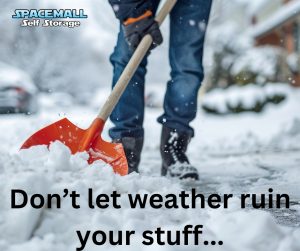
Winter in southeastern Pennsylvania can be beautiful — but it can also be brutal on stored belongings. Between excessive ice, heavy snow, freezing temperatures, and moisture, winter creates real risks for furniture, electronics, documents, and seasonal equipment. Consider these winter storage tips to avoid damaging your belongings!
Whether you’re storing household items, business inventory, or recreational gear, taking the right precautions now can prevent costly damage later. At Spacemall Storage in Oaks, PA, we help customers protect their belongings year-round. Below are 10 practical winter storage tips to keep your items safe all season long.
-
Choose Climate-Controlled Storage When Possible
Cold temperatures and humidity swings are the biggest threats during winter. Climate-controlled storage helps maintain a stable environment that protects wooden furniture, electronics, paper documents, and musical instruments.
-
Use Plastic Bins Instead of Cardboard Boxes
Cardboard absorbs moisture from the air, especially during snow melt and freeze-thaw cycles. Over time, boxes can weaken, collapse, or grow mold. Use sealed plastic bins for winter storage.
-
Elevate Items Off the Floor
Even in well-maintained storage facilities, winter brings melting snow, tracked-in moisture, and higher humidity. Place items on wooden pallets or shelving units to add a buffer against moisture.
-
Protect Furniture with Breathable Covers
Avoid wrapping furniture tightly in plastic, which can trap condensation. Instead, use cotton sheets or furniture blankets.
-
Drain All Liquids from Stored Equipment
Drain fluids from lawn mowers, power washers, hoses, and snow blowers before storing.
-
Add Moisture Absorbers
Use silica gel packets or DampRid containers to help control condensation and reduce mold risk. Desiccants remove the smell of mildew and help prevent moisture damage.
-
Wrap Electronics and Appliances Carefully
Wrap items in moving blankets or bubble wrap. Store electronics off the floor and let them warm to room temperature before use.
CDC winter safety tips suggest preparing ahead for winter storms.
-
Store Documents in Waterproof Containers
Use waterproof document boxes, zip-seal plastic sleeves, and desiccant packets.
Learn more about winter preparedness.
-
Leave Aisles for Winter Access
Leave a narrow walkway and keep frequently needed items near the front of your unit.
-
Check Your Unit Periodically During Winter
Inspect for moisture, condensation, and seal integrity every few weeks. It’s especially important to check after a storm to make sure that snow and ice didn’t push under the weatherstripping.
Why Winter Storage Prep Matters in Oaks & Phoenixville, PA
Montgomery County winters bring freeze-thaw cycles, excessive ice buildup, and heavy snowfalls that can create moisture intrusion and temperature stress.
Explore our storage options here
Get Winter-Ready Storage at Spacemall Storage
Serving Oaks, Phoenixville, Collegeville & Montgomery County
Contact us today!
Learn more about us here.
—
Frequently Asked Questions About Winter Storage
Do I really need climate-controlled storage in winter?
Yes. Climate-controlled storage helps protect furniture, electronics, documents, and other sensitive items from freezing temperatures, condensation, and moisture caused by excessive ice and snow.
Can cold weather damage items in a storage unit?
Yes. Freezing temperatures and humidity swings can crack wood, warp furniture, damage electronics, and cause mold growth on fabrics and paper.
How do I protect my belongings from winter moisture?
Use plastic bins instead of cardboard, elevate items off the floor, add moisture absorbers like silica gel or DampRid, and store sensitive items in waterproof containers.
Should I visit my storage unit during the winter?
Yes. Checking your unit every few weeks allows you to spot condensation, moisture, or shifting items early before damage occurs.
What items should always be climate-controlled?
Electronics, photographs, paper documents, wooden furniture, musical instruments, artwork, and leather goods should always be stored in a climate-controlled unit.